I am fortunate to participate in the traditional Chinese culture lecture organized by the company this month,
The teacher's main theme is the integration of knowledge and action, the Tao, and morality,
Combining the five principles of benevolence, righteousness, propriety, wisdom, and trustworthiness,
Closely integrating millennium wisdom with our company's reality,
It has deeply inspired me.
As a quality assurance personnel,
I realize that traditional Chinese culture is not just a metaphysical philosophy,
It is also a guiding light for our daily work.
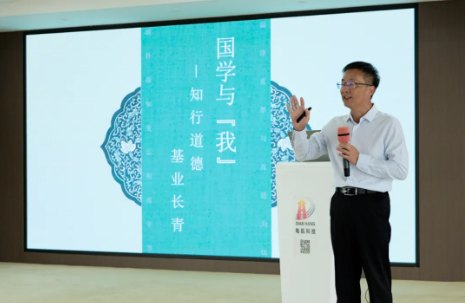
morality
'Dao' is a law, 'De' is following.
In quality assurance work,
Dao "refers to the quality laws and standard system of the wire and cable industry,
From raw materials to production processes, and then to finished product inspection,
Every step has its objective laws.
'De' refers to our adherence to and adherence to these laws.
Quality assurance work cannot tolerate any falsehood,
Only by respecting standards and adhering to norms,
Only then can the product withstand the test of time and the market.
In the quality assurance position, our 'gains'
It is the safety and reliability of the product, as well as the high trust of customers.
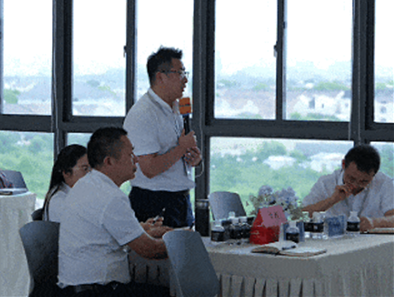
Knowledge and Action
Wang Yangming's concept of "unity of knowledge and action",
As the core essence of this training,
It is also the core essence of quality assurance work.
Knowledge "means being familiar with UL standards
Proficient in quality control processes and grasp the key points of product quality inspection;
'Action' means putting what one has learned into practice,
Transform theoretical standards into rigorous practical operations day after day.
I am well aware that being familiar with standards but perfunctorily implementing them is a disconnect between knowledge and action,
Only through knowledge can we promote action, and through practice can we learn,
Only then can we truly control the quality of our products.
Therefore, the guarantor needs to achieve the unity of knowledge and action,
Internalize quality standards in the heart and externalize them in practice.
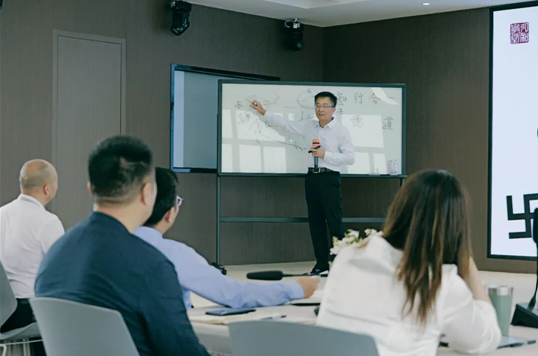
Five Constants
'Benevolence, righteousness, propriety, wisdom, and trustworthiness' are the professional ethics of a quality assurance company.
Benevolence "means treating work with a compassionate heart,
Take every roll of cable as a responsibility to safeguard user safety.
'Justice' means upholding justice,
When facing pressure, we still adhere to quality standards, do not compromise, and do not falsify.
'Ritual' means following the system, respecting the norms of the process, and making order a habit.
Wisdom "means continuous learning and mastering detection techniques,
Use quality tools such as cause and effect diagrams and control charts to analyze and improve.
Trust is based on honesty and integrity,
Record testing data truthfully, without concealment or false reporting.
Only by combining these five elements can we cultivate a strong sense of quality.
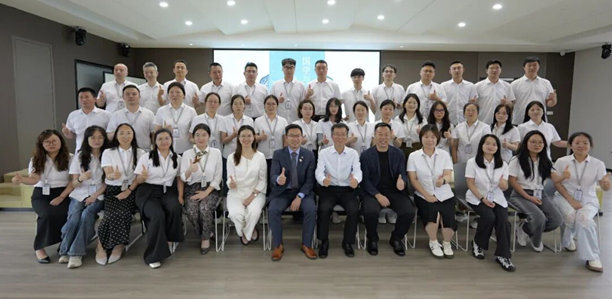
This training has made me understand that traditional Chinese culture is not a collection of books that should be kept on the shelf,
But it is the wisdom infused into the bloodline.
In future quality assurance work,
I will take "Dao" as the direction and "De" as the foundation,
Using the method of "integrating knowledge with action" and the principle of "benevolence, righteousness, propriety, wisdom, and trustworthiness",
Based on our job responsibilities, we must uphold the bottom line of quality.
With first-class quality, innovative technology, and efficient service,
Contribute our own strength to Made in China.
苏州市常熟辛庄镇北方家路2号
客服热线:0512-69227868
E-mail:liuchunhuisz@163.com
 扫码关注公众号
